Soap Residue (White Stains) & Detergent Use – Expert Guidance
This guidance is based on scientific knowledge, supported by consumer experts, and drawn from our experience specialising in laundry equipment.

Detergent Usage and White Residue (Stains)
White stains are generally caused by a mismatch between water level, detergent dosage and load size.

✔️ The Solubility Test
- To check if your detergent dissolves fully, stir one teaspoon into a glass of water. If sediment settles at the bottom, consider switching to a high-efficiency (HE) detergent that dissolves completely.
✔️ Application
- Always add detergent directly into the washtub before loading clothes.
✔️ Dosage
- Use 1–2 tablespoons (15–30 ml) of liquid HE detergent per regular load. Adjust for soil level; however, avoid overdosing. For more tips on dosage, click here.
✔️ The Chemistry of Residue
- Detergents bind to dirt and oils. If a load is lightly soiled, excess detergent has no dirt to bind to and may remain on the fabric, causing stiffness or white marks.
✔️ Balance
- It is better to underuse than overuse detergent. Overdosing leaves residue; underdosing reduces cleaning effectiveness.
✔️ Water Hardness
- Detergent dissolves more easily in soft water; slightly more may be needed in hard water areas.

AWNE8 Specific Cycle Tips
Manual Water Levels
- Select the Large Load water level and Heavy-Duty cycle. This is often more effective than “Auto Fill,” which fills the tub in stages and may not fully saturate garments during the initial wash phase.
Saturation
- Ensure clothes are not overcrowded; they must be fully submerged and able to circulate freely.
The Eco Cycle
- This cycle is not recommended when using fabric softener. It uses a spray rinse rather than a full tub rinse, leading to uneven distribution. If you use the Eco cycle, you must select the Extra Rinse option.
Fabric Softener (Stay Soft) Best Practices
Improper use of liquid softener (which is oil-based) can lead to blue spots, blotching, or waxy buildup in the machine.
✔️ Required Dilution
- Mix one part fabric softener with three parts water before adding it to the dispenser. Stir well, as thick, undiluted softener can cause blotching. Ensuring correct consistency prevents softener from clogging the small dispensing holes on the side of the agitator.
✔️ Temperature Sensitivity
- In extremely cold weather, liquid softener can coagulate (thicken). Ensure it is stored at room temperature and diluted to a thin consistency.
✔️ Dispenser Maintenance
- Add softener below the fill line. Periodically clean the dispenser with hot, soapy water to prevent residue buildup. Using boiled water from a kettle, diluted with a small amount of vinegar and dishwashing liquid, poured down the funnel of the agitator, and cleaned with a bottle brush, helps to loosen residue quickly so it can dispense through the inner holes. The process can be repeated until fully cleaned.
✔️ Light Colours
- Use light-coloured softeners to prevent accidental staining on white or pale fabrics.
Detergent and Softener Stain Removal – Troubleshooting and Alternatives
If blue spots or greasy marks appear on clothing after a wash, do not put them in the dryer. Instead, rub the affected spots with a bar of laundry soap and re-wash the item.

Removing Softener Stains
- If blue spots or greasy marks appear on clothing after a wash, do not put them in the dryer. Instead, rub the affected spots with a bar of laundry soap and re-wash the item.
Recommended Alternatives:
If you wish to avoid liquid softeners, the following are approved alternatives:
✔️ White Vinegar
- Add half a cup to the rinse cycle when the tub is full. This softens clothes and removes detergent buildup without leaving a scent.
✔️ Dryer Sheets or Wool Balls
- These can be used in the tumble dryer to reduce static and soften fabrics.
✔️ Aluminium Foil
- Eight centimetre balls of aluminium foil in the dryer can help eliminate static.
Additional Technical Resources
Loading the Washer
NOTE: Always add detergent first.
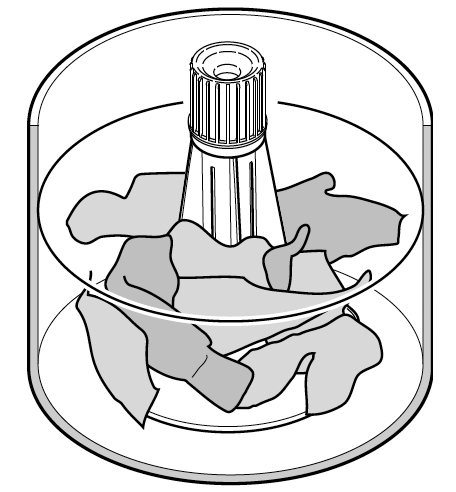
- Load larger and heavier items first so they are at the bottom of the washtub.
- Load items by the amount of space they take up, not by their weight.
- Mix large and small items in a load to get the best washing results. For example, don’t wash a single large item such as a throw rug. Add several smaller items to avoid an out-of-balance condition.
• An out-of-balance load may limit spin speeds.
• The left decimal point on the display may blink on/off at the end of a cycle if the load did not reach maximum
speed. This can indicate an unbalanced load. - Drop items loosely into the washtub. The bulk of the clothes rather than the weight will determine load size. Do not pack items in or wrap them around the agitator. Overloading can cause poor cleaning, excessive wrinkling and tears.
- Items should move freely through the wash water for best cleaning results.
- When washing very large items, do not fill washtub as full as with other loads.
Fabric Softener Dispenser
Fabric softener should not be used with the Normal Eco cycle unless the Extra Rinse option is also selected.
To Use Dispenser
- After the clothes are loaded into the washtub and before the start of the WASH cycle, pour the proper amount of liquid fabric softener into the bottle measuring cap (refer to bottle directions). Pour into dispenser.
- The large fabric softener dispenser allows for the fabric softener to be diluted with water. We recommend adding fabric softener up to the fill level. Do not exceed tip of arrow which indicates correct fill level. Over-filling can allow fabric softener to spill onto the clothes, causing stains on clothes if the softener comes into contact with detergent suds.
- Setting the water level to medium or higher will result in better performance from the fabric softener.
- The fabric softener will remain in the dispenser during the wash fill, agitation and spin. At the end of the wash spin, the liquid fabric softener will be dispensed into the washtub through the slots in the agitator and will be mixed with the incoming rinse water.
To Clean Dispenser
1. Grasp the entire fabric softener assembly firmly with both hands and place your thumbs inside the hole at the top.
2. Pull quickly up and towards you. The assembly will come off the agitator.
3. Lay down a cloth on a hard, flat surface.
4. Lay the assembly on the cloth on its side so the vertical lines are facing up.
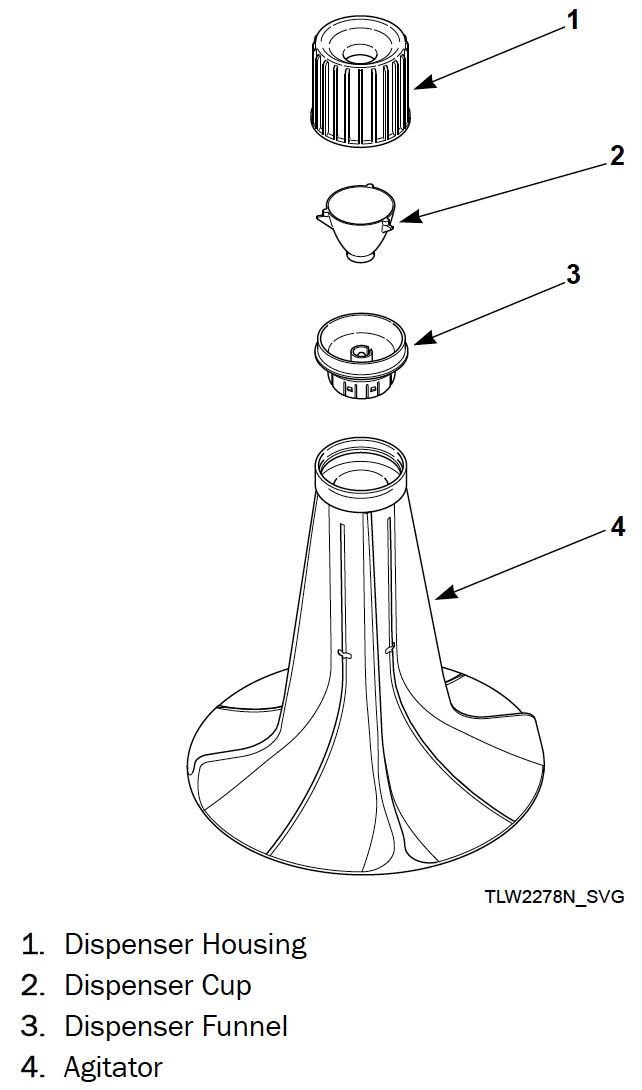
5. Place your palms on the ridge at the base of the dispenser housing and press down firmly. The assembly will split apart for easy cleaning.
6. Soak housing, cup and funnel in hot soapy water. Use a small brush to scrub if needed.
7. Rinse housing, cup and funnel clean.
8. The inside of the agitator can also be cleaned, using boiled water from a kettle, diluted with a small amount of vinegar and dishwashing liquid. Pour down the funnel of the agitator and cleaned with a bottle brush. This helps to loosen residue quickly so it can dispense through the inner holes. The process can be repeated until fully cleaned.
9. After cleaning, install dispenser funnel, cup and housing until they click into place.
10. Push assembly directly downward onto top of agitator until firmly snapped in place.
IMPORTANT: When adding detergent to the wash load, DO NOT allow any detergent to enter the softener dispenser cup. If this happens, refer to the cleaning instructions.
A NOTE REGARDING THE AWNE8 ELECTRONIC WASHER: When adding detergent, it is recommended to pour it away from the lid lock mechanism, preferably on the left side. The lid lock mechanism is located in the right-hand corner under the lid. Pouring detergent too close to this mechanism can cause spillage or allow detergent to enter, which may cause the wire from the lid lock mechanism to short to the PC board. This can seize the lid lock mechanism and lead to a costly repair that can be avoided.
Useful Tips
- Fabric softener spilled onto garments may cause staining. To remove, dampen stain and rub with bar soap. Wash as usual.
- Liquid fabric softeners will be dispensed during the first rinse and should not be combined with bleach, bluing, starch, detergents, soaps or packaged water conditioners.
- Fabric softener is not to be used in dispenser when using Prewash cycle, if available.
- When adding detergent to wash water, do not allow any to enter into softener dispenser cup, as softener will become gummy.
To prevent softener buildup, the dispenser can be filled with clean water for automatic cleaning. This can be done in washing cycles other than when softener is used.

Normal Eco Cycle Explained
The video explains how the Normal Eco cycle works on both electronically controlled and timer-controlled models, highlighting the differences in water filling and rinsing processes.

Autofill Explained
Engineers discuss how the system senses the type and weight of the load to determine the optimal water level, ensuring a thorough wash without overfilling. Benefits of using auto-fill, including improved wash performance and water conservation are highlighted.
